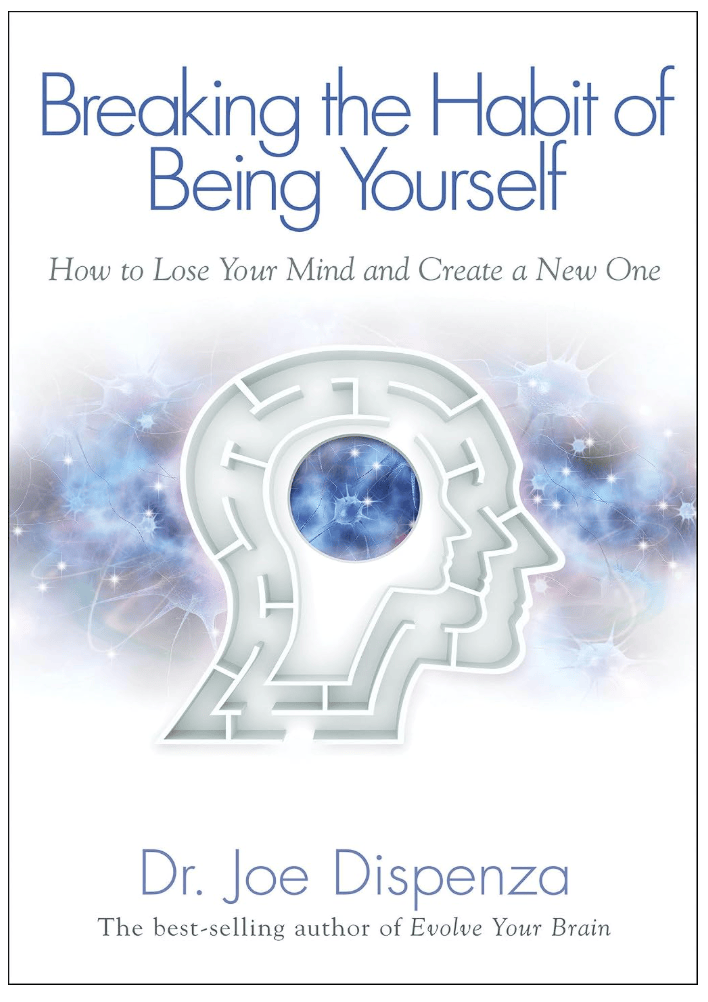
I finished this book with one question lingering in my mind:
How much of who I am is really “me” — and how much is simply a collection of thoughts, emotions, and reactions that I have practiced for so long that they have become automatic?
That, for me, is the most powerful idea in Breaking the Habit of Being Yourself.
Joe Dispenza argues that we tend to think the same thoughts, experience the same emotions, behave in familiar ways, and consequently keep reinforcing the same identity. Eventually, we don’t even realize we’re doing it. We simply say, “That’s who I am.”
But what if it isn’t?
What if some parts of our personality are habits?
One of my favorite concepts in the book is the progression from thinking → doing → being.
First, we understand something intellectually. Then we deliberately practice it. Eventually, after enough experience and repetition, it becomes more natural. We no longer have to constantly remind ourselves how we want to behave. We begin to be that person.
This changed the way I thought about personal growth.
Reading about confidence doesn’t make me confident. Understanding emotional regulation doesn’t make me emotionally regulated. Knowing that I shouldn’t react impulsively doesn’t magically stop me from reacting.
Insight is only the beginning.
The real work starts when life gives me an opportunity to practice.
And this book made me think seriously about the woman I want to practice becoming.
I want to be more grounded in uncertainty. I want to create space between what happens to me and how I respond. I want to respond rather than react.
I want to judge myself and other people less. Not because judgmental thoughts will magically disappear, but because I’ve realized that I don’t have to participate in every thought my mind produces.
I want courage paired with a quiet, kind confidence — the kind that doesn’t need to enter a room and prove anything.
I want to hear people, not simply listen to them. To become curious enough and still enough to notice what is happening underneath their words.
And I want to recognize abundance while I’m actually living it.
Abundance isn’t only some future moment when everything is resolved and I finally have everything I want. It is also dinner around the table. A conversation with my children. My home. My health. A meaningful book. Work I care about. People I love. The freedom to make choices about my life.
There are parts of Dispenza’s book that I take with a healthy dose of skepticism. He moves between neuroscience, spirituality, meditation, and quantum physics, and I don’t think all those claims should automatically be treated as equally scientifically established.
But I don’t need to believe every explanation in the book to find its central practice valuable.
The meditation system ultimately asks us to do something surprisingly practical:
Recognize the old pattern. Observe it. Stop rehearsing it. Decide who you want to become. Then mentally and behaviorally rehearse that person instead.
That is what I’m taking from this book.
Perhaps breaking the habit of being yourself doesn’t mean rejecting who you’ve been.
Perhaps it means realizing that your past doesn’t have to keep receiving an automatic vote in every decision you make about your future.
You can notice the old version of yourself without fighting her.
You can thank her for getting you this far.
And then, little by little, you can practice someone new.
My biggest takeaway from this book can probably be summarized in one sentence:
I want to move through life slowly enough to see clearly, quietly enough to hear deeply, and courageously enough to choose my response.
And perhaps one day, with enough practice, I won’t have to remind myself to become that woman.
I’ll simply be her.


Leave a Reply